Enhanced/Dual Powered
Willem EPROM Programmer
User Guide
Main Board / Cables
Main Board PCB3.5
Main Board PCB4E

Main Board PCB5.0

Main Board PCB5.5C

|
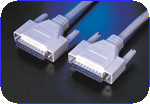
Parallel Data Cable (Printer extension cable, with male-female 25 pin connector, and pin to pin through) |
A-A type USB cable(for power) |
|
|
|
Optional Items:
|
ATMEL 89 Adapter |
ATMEL PLCC 44 Adapter |
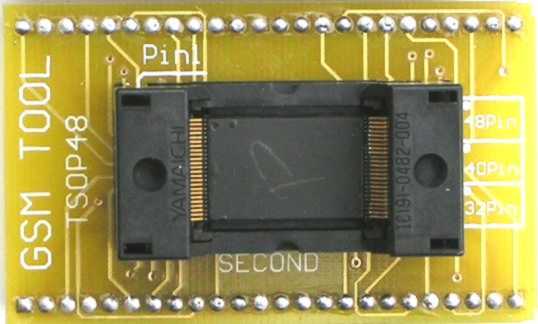
TSOP 48 Adapter |
|
|
|
|
|
FWH/HUB PLCC32Adapter |
PLCC32 Adapter |
SOIC Adapter(Simplified) |
|
On-Board |
On-Board |
|
|
AC or DC Power Adapter (9V or 12V, 200mA) |
SOIC Adapter(Professional) |
|
|
|
|
|
Make sure the tone is professional but engaging, with examples to illustrate points. Use subheadings to break up text, maybe bullet points for features. Need to check the official link again (if possible) but since I can't access it now, rely on the user's provided information.
Okay, time to structure the blog. Start with an engaging intro, define the tool, go into features, benefits, use cases, challenges, and close with a conclusion and FAQs. srkwikipad link
: Is SRKWikipad open source? A : The core tool is open source, but advanced AI features require a paid subscription. Make sure the tone is professional but engaging,
In an era where teams are geographically dispersed and digital workflows dominate, the demand for efficient, intelligent, and collaborative document management tools has never been higher. Enter SRKWikipad , a pioneering AI-powered platform that merges the collaborative spirit of wikis with the agility of real-time editing tools like Google Docs or Notion. But SRKWikipad isn’t just another document editor—it’s a reimagining of how we create, manage, and evolve knowledge in the digital age. Okay, time to structure the blog
Wait, the user might be a developer or someone interested in AI tools for documentation. They might want to know how SRKWikipad can streamline document creation. I should highlight collaboration features since the link mentions real-time collaboration and version control. Also, the AI integration part is crucial—like how it handles code snippets or technical documentation.
I need to make sure I cover technical aspects but keep it accessible. Maybe start with defining SRKWikipad as a hybrid of wiki and real-time document editor. Then dive into features like AI-generated content, versioning, markdown support. Benefits could include efficiency, accuracy, and team workflows.
First, I need to outline the blog structure. Common sections include an introduction, what the tool is, its key features, benefits, potential applications, challenges/risks, and a conclusion. Maybe also include some expert opinions and a FAQ section.
Hardware Installation & Configuration
|
Installation Steps
(Note: the LPT port of PC MUST set to ECP or ECP+EPP during BIOS setup. To enter the BIOS setting mode, you need press "Del" key or "F1" key during the computer selftest, which is the moment of computer just power up.)
Software Version To Use | |||
| |||
|
| |||
|
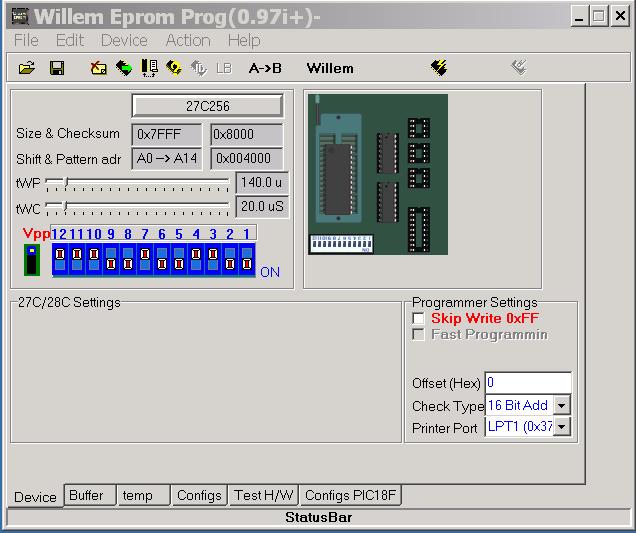
The software interface:
| |||
|
| |||
|
Hardware
Check
| |||
|
PCB3.5/PCB4E
PCB5.0
PCB5.5C
Note: the Vcc setting jumper only has effect when you are using AC adaptor as power source. For the USB power only 5V Vcc is available. For the PCB5.5C, set DIP steps: 1. press DIP Set button twice to check current DIP bit position. Then set it again for ON or OFF. 2. press DIP Bit shift button to shift the DIP bit position to where need to set. And then press DIP Set button twice to check current DIP bit position. Then set it again for ON or OFF. 3. Repeat those steps till all DIP bit ae set same as software indicated. For PCB5.5C voltage and Special chip selection: 1. Put back the safety jumper. 2. Press the voltage button and hold for 1 second, the voltage LED should move to next. Repeat till desired voltage LED light up. 3. Press the chip selection button and hold for 1 second, the chip LED should move to next. Repeat till desired LED light up. 4. Remove the safety jumper to lock the selected voltage and chip selection
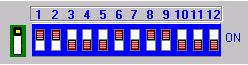
DIP Switch (PCB3.5, PCB5.0)
When programming one chip, follow the program prompt to set DIP switch .
|
Make sure the tone is professional but engaging, with examples to illustrate points. Use subheadings to break up text, maybe bullet points for features. Need to check the official link again (if possible) but since I can't access it now, rely on the user's provided information.
Okay, time to structure the blog. Start with an engaging intro, define the tool, go into features, benefits, use cases, challenges, and close with a conclusion and FAQs.
: Is SRKWikipad open source? A : The core tool is open source, but advanced AI features require a paid subscription.
In an era where teams are geographically dispersed and digital workflows dominate, the demand for efficient, intelligent, and collaborative document management tools has never been higher. Enter SRKWikipad , a pioneering AI-powered platform that merges the collaborative spirit of wikis with the agility of real-time editing tools like Google Docs or Notion. But SRKWikipad isn’t just another document editor—it’s a reimagining of how we create, manage, and evolve knowledge in the digital age.
Wait, the user might be a developer or someone interested in AI tools for documentation. They might want to know how SRKWikipad can streamline document creation. I should highlight collaboration features since the link mentions real-time collaboration and version control. Also, the AI integration part is crucial—like how it handles code snippets or technical documentation.
I need to make sure I cover technical aspects but keep it accessible. Maybe start with defining SRKWikipad as a hybrid of wiki and real-time document editor. Then dive into features like AI-generated content, versioning, markdown support. Benefits could include efficiency, accuracy, and team workflows.
First, I need to outline the blog structure. Common sections include an introduction, what the tool is, its key features, benefits, potential applications, challenges/risks, and a conclusion. Maybe also include some expert opinions and a FAQ section.