Shatru Samhara Trishati Sanskrit Pdf May 2026
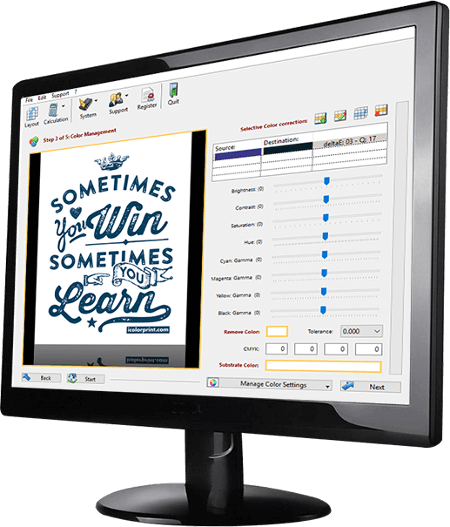
DTF Pro™ has developed a series of software packages to enhance your IColor printing experience. The DTF Pro™ TransferRIP and ProRIP and ProRIP Essentials packages make it simple to produce spot color overprint and underprint in one pass. The Absolute White RIP helps you use an Absolute White Toner Cartridge in a converted CMYK printer, and create 2 pass prints with color and white. The DTF Pro™ SmartCUT suite allows your A4/Letter sized printer to produce tabloid or larger sized transfers! Use one or more with the DTF Pro™ 500, 600 and 800 series of transfer printers.
Use the DTF Pro™ ProRIP software to print white as an underprint or overprint in one pass.
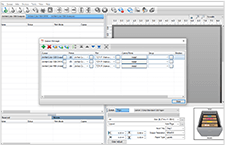
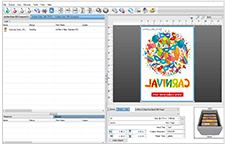
This professional version is designed for higher volume printing with an all new interface. Design files can be printed directly from your favorite graphics program, as well as imported directly into DTF Pro™ ProRIP. shatru samhara trishati sanskrit pdf
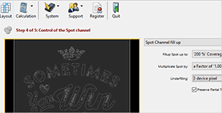
The DTF Pro™ ProRIP software allows the user to control the spot white channel feature. Three cartridge configurations are available: Spot color overprinting, where white is needed as a top color for textiles; Spot color underprinting for printing on dark or transparent media where white is needed as a background color and standard CMYK printing where a spot color is not needed. No need to create additional graphics with different color configurations – the software does it all – and in one pass! Enhance the brilliance of any graphic with white behind color! A meditator opens the file at midnight
Compatible with Microsoft Windows® 8 / 10 / 11 (x32 & x64) only. Some read it literally, seeking deliverance from hostile
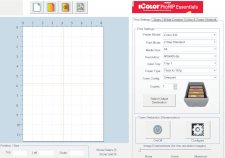
A simplified version of ProRIP which includes all of the most commonly used features of ProRIP with an easy to use interface. This Essentials version simplifies the printing process and allows the user to print efficiently and quickly without any training. All of the important and frequently used aspects of the software are included in this version, while all of the ‘never used’ or confusing aspects of the software are left out.
Comes standard with the IColor®540 and 560 models and is compatible with the IColor 550 as well.
Does not work with IColor 500, 600, 650 or 800 (yet).
Improvements over the ‘Standard’ ProRIP:
A meditator opens the file at midnight. The devanagari script on the screen seems to pulse, as if the letters themselves recall the vibration of recited mantras. Each śloka can be read as an invocation, a psychological lever to reorient intention. Some read it literally, seeking deliverance from hostile people or forces; others read it metaphorically, treating "enemies" as inner obstructions — fear, anger, ignorance. Here, samhara becomes not merely violent obliteration but the ruthless clarity that dissolves whatever blocks the path of insight.
Sanskrit, with its uncompromising precision, sculpts meaning so that sound and sense align. Consonants bite, vowels open; meters carry mood. Even in a scanned PDF, a competent reader can feel the metrical heartbeat of the trishati: repetitions that function like deep breaths, steadying the nervous system, re-patterning attention. The text’s ritual context is never far — instructions for recitation, number of repetitions, specific offerings — yet the file’s portability detaches it from temple rules, inviting personal, private engagement.
Consider the ethics braided into the practice. A chant meant to "destroy enemies" invites reflection: who defines the enemy? If used externally, it risks becoming a tool of grievance; used introspectively, it becomes radical self-discipline. In contemporary hands, the PDF can be both weapon and scalpel. The responsible practitioner reads both the verses and their shadow, cultivating discernment to transform adversarial energy into boundary, resilience, and compassion.
Finally, imagine closing the PDF after a session. The screen goes dark; the silence that follows is part of the practice. Whether one sought literal protection or inner emancipation, the act of recitation — even via a cold, modern document — has altered the body’s chemistry, shifted attention, rewired habit. The trishati’s three hundred keys, looped through breath and intent, have done their work: not annihilation for its own sake, but the delicate, sometimes brutal clearing required for growth.
"Shatru Samhara Trishati" — three hundred verses that, in the hush between breath and mantra, promise the removal of enemies. The title itself is a hinge: shatru (enemy), samhara (destruction/removal), trishati (three hundred). Imagine an ancient palm-leaf manuscript, edges browned, Sanskrit syllables arranged like beads on a rosary, each a tiny tool to sever subtle knots in the heart.
Hold that PDF in your mind as a modern relic: a flat, glowing slab that carries the weight of a temple library into the palm of a commuter. The binary simplicity of "pdf" belies a complex lineage — oral intonation, guru’s breath on student ears, the scent of incense — now collapsed into pixels and searchable text. There is something both sacramental and secular about that compression: protection-seeking verses traveling through fiber optics.
There is also a cultural archaeology in the file: marginalia, a faded guru note, a different orthography indicating age, or metadata that betrays the modern uploader’s username. The migration from palm to pixel raises questions about custody and care: how do we respect origin while benefiting from access? The PDF democratizes but also detach(es) ritual from lineage. In that tension lies the poignancy of modern devotional life.
A meditator opens the file at midnight. The devanagari script on the screen seems to pulse, as if the letters themselves recall the vibration of recited mantras. Each śloka can be read as an invocation, a psychological lever to reorient intention. Some read it literally, seeking deliverance from hostile people or forces; others read it metaphorically, treating "enemies" as inner obstructions — fear, anger, ignorance. Here, samhara becomes not merely violent obliteration but the ruthless clarity that dissolves whatever blocks the path of insight.
Sanskrit, with its uncompromising precision, sculpts meaning so that sound and sense align. Consonants bite, vowels open; meters carry mood. Even in a scanned PDF, a competent reader can feel the metrical heartbeat of the trishati: repetitions that function like deep breaths, steadying the nervous system, re-patterning attention. The text’s ritual context is never far — instructions for recitation, number of repetitions, specific offerings — yet the file’s portability detaches it from temple rules, inviting personal, private engagement.
Consider the ethics braided into the practice. A chant meant to "destroy enemies" invites reflection: who defines the enemy? If used externally, it risks becoming a tool of grievance; used introspectively, it becomes radical self-discipline. In contemporary hands, the PDF can be both weapon and scalpel. The responsible practitioner reads both the verses and their shadow, cultivating discernment to transform adversarial energy into boundary, resilience, and compassion.
Finally, imagine closing the PDF after a session. The screen goes dark; the silence that follows is part of the practice. Whether one sought literal protection or inner emancipation, the act of recitation — even via a cold, modern document — has altered the body’s chemistry, shifted attention, rewired habit. The trishati’s three hundred keys, looped through breath and intent, have done their work: not annihilation for its own sake, but the delicate, sometimes brutal clearing required for growth.
"Shatru Samhara Trishati" — three hundred verses that, in the hush between breath and mantra, promise the removal of enemies. The title itself is a hinge: shatru (enemy), samhara (destruction/removal), trishati (three hundred). Imagine an ancient palm-leaf manuscript, edges browned, Sanskrit syllables arranged like beads on a rosary, each a tiny tool to sever subtle knots in the heart.
Hold that PDF in your mind as a modern relic: a flat, glowing slab that carries the weight of a temple library into the palm of a commuter. The binary simplicity of "pdf" belies a complex lineage — oral intonation, guru’s breath on student ears, the scent of incense — now collapsed into pixels and searchable text. There is something both sacramental and secular about that compression: protection-seeking verses traveling through fiber optics.
There is also a cultural archaeology in the file: marginalia, a faded guru note, a different orthography indicating age, or metadata that betrays the modern uploader’s username. The migration from palm to pixel raises questions about custody and care: how do we respect origin while benefiting from access? The PDF democratizes but also detach(es) ritual from lineage. In that tension lies the poignancy of modern devotional life.
Use the DTF Pro™ TransferRIP software to print white as an underprint or overprint in one pass.
Designed for every day, short to mid run use, the DTF Pro™ TransferRIP software allows the user to control the spot white channel feature. Two cartridge configurations are available: White overprint, where white is needed as a top color for textiles; and white underprint for printing on dark or transparent media where white is needed a round color. No need to create additional graphics with different color configurations – the software does it all – and in one pass! Enhance the brilliance of any graphic with white behind color!
Compatible with Microsoft Windows 7 / 8 / 10 (x32 & x64) only.